Saturday, February 27, 2010
How to get from "why me?" to "why not me?"
Justin Taylor posts a powerful excerpt from one of David Powlison's writings on suffering.


How to disagree in church
Alan Knox has a good post entitled Disagreements without Separation.
The first of seven points is this:
The first of seven points is this:
Start with our agreement, primarily in the person and work of Jesus Christ, in our common relationship to God and to one another. When we start with our agreement we can recognize that most of our disagreements are insignificant compared to the greatness and immensity of our agreements.
Sunday, January 3, 2010
Another reading plan...
If the plan I mentioned earlier is too disjointed for you (four different places in the Bible), you can also try following along at Step thru the Scriptures. This plan consists of two separate readings a day, and it too is accompanied by comments.
Grammatical Concepts 101 for Biblical Greek
 Grammatical Concepts 101 for Biblical Greek: Learning Biblical Greek Grammatical Concepts Through English Grammar by Gary A. Long
My rating: 5 of 5 stars
This book is an excellent supplement to a standard 1st year NT Greek grammar. I no longer have access to a copy of the book, so my comments will be general; this book provides material behind and beyond and in between that of a typical 1st year (and maybe even 2nd year!) grammar.
Behind
A good grammar will enlist linguistics to aid the student in acquiring NT Greek. This book provides additional background to this important topic; it fleshes out and provides context to the brief discussions that are only included in the beginning grammars for pragmatic reasons.
Beyond
This book takes the student beyond most introductory grammars by discussing topics related (or part of?) linguistics such as semantics and discourse analysis. A beginning grammar might be headed towards these topics, but doesn’t usually get there.
In Between
Not only does Long provide material that is normally left out of grammars, he also assists with the material that the grammars do cover (cases, declensions, pronouns, verbs, etc). His definitions are clear and his discussions are tight. From what I can tell, reading his coverage on topics such as verbal aspect provides a more mature orientation than most beginning grammars are able to give.
In short, use this book as a companion to whatever introductory Greek grammar you are studying. It provides background and context that will assist in your journey to understand and use Greek.
View all my reviews >>
Friday, January 1, 2010
For the Love of God...For Free!
Justin Taylor links to the new For the Love of God blog. You can go there each day to get your reading schedule, and to get Carson's comment. It looks like they will be going through Volume 1 this year.
You can also see my last post.
You can also see my last post.
For the Love of God
 For the Love of God: A Daily Companion for Discovering the Treasures of God's Word by D.A. Carson
My rating: 5 of 5 stars
Here is a devotional companion that I can stick to! And better yet, it is currently one of two volumes, and word has it that Carson is working on Volumes 3 and 4.
As Carson notes in the preface, many devotional guides will have you read a handful of verses here and some personal gems there. Both the selection of readings and the application comments made on them may well provide encouragement to the Christian, “but they do not provide the framework of what the Bible says—the ‘plotline’ or ‘storyline’—the big picture that makes sense of all the little bits of the Bible” (p.x). Carson continues:
“Wrongly used, such devotional guides may ultimately engender the profoundly wrong-headed view that God exists to sort out my problems; they may foster profoundly mistaken interpretations of Scripture, simply because the handful of passages they treat are no longer placed within the framework of the big picture.”
After exposing the needs of the hour, this devotional seeks to meet them. First, by its reading plan: an average day’s allotment is four chapters, all from four different books of the Bible (a slight modification of the plan devised by the great Scottish minister, Robert M’Cheyne). After a year the reader has read the entire Bible once, and the NT and Psalms twice. Second, by the comments, which generally focus on just one of the four readings for the day. I will review the reading scheme and the comments in turn.
Reading Plan
As previously mentioned, an average day calls for the reading of four chapters from four different parts of Scripture. So on January 1st, for example, one would read Genesis 1, Ezra 1, Matthew 1, and Acts 1. This example of readings illustrates the potential this plan has for meeting Carson’s end, for one realizes that each of these chapters tells the story of a distinct ‘beginning’ (a fitting theme for the first day in a new year) in the Bible (in reverse order, the beginning of the church, of Jesus Christ, of God’s people’s return to Jerusalem, and of the universe). Reading the chapters against each other leads one to discover legitimate links throughout the canon, links which make up the “framework” of Scripture.
Reading consecutively from different sections of Scripture not only helps the Bible ‘stick’ to the reader, but it helps the reader stick to reading Scripture! Reading multiple chapters from the same book of the Bible might be great when you’re in Esther, but what happens to your motivation when you’re faced with three days in a row of 1 Chronicles 1 – 12? Reading across Scripture rather than through it guarantees that what seems (at first, at least) to be leaner sections are supplemented by scriptures whose nourishment is more easily gleaned.
Comments
Like the readings, these too are committed to “helping the reader keep the big picture of the Bible’s ‘story line’ in mind, and to see what relevance this has for our thinking and living” (p.13). Carson’s commitment to showing the big picture edges out concerns of always providing a personal, individual, ‘boost’ to the reader: “although I want the comments to be edifying, this edification is not always of a private, individualized sort. My aim is to show, in however preliminary a way, that reading the whole Bible must stir up thoughtful Christians to thinking theologically and holistically, as well as reverently and humbly” (p.13).
I know of no other devotional whose comments are as faithful to context and yet stirring to the imagination. Carson never (I dare say) makes an application at the expense of context. And for him, unlike many others, context is not restricted to the historical and literary, but also includes the canonical. Thus reflection on Psalm 68:11 (“The Lord announced the word, and great was the company of those who proclaimed it”) begins at the historical contextual level, where “the ‘word’ that the Lord announced is the word of [battle:] victory”, and legitimately winds its way to the canonical level, to Jesus Christ himself:
“The ultimate end of the exile, the ultimate triumph of God, lies in the gospel itself. As in the case of the beautiful feet pounding across the mountains to bring the good news, and as in the case of the company of those who proclaimed the word the Lord announced, so also with us (and how much more so!): the only right response to the word of the glorious victory of God in the cross of Jesus Christ is that there be a great company to proclaim it.”
In this volume Carson frequently comments on the readings that lie in the minor and major prophets. Most of us would admit that at times these books of the Bible can be tough slogging. Carson’s comments not only furthered my understanding of these important books, but they also kept me coming back each day for more!
Tune in a year from now, Lord willing, for a review of Volume 1. And in the meantime, pick up one of the volumes yourself and enjoy!
View all my reviews >>
Monday, December 28, 2009
New Donald Ross paper
James Harvey has recently completed a paper that explores "the doctrine of salvation held by Donald Ross". From his blog post, he hopes that the essay will help the following groups of people:
- Brethren who appreciate teachers like John Piper and John MacArthur and their high view of God, yet feel that such bold Calvinism is somehow inconsistent with received or legitimate Brethren theology
- Brethren who view Calvinism as an unwelcome intruder, a threat to robust evangelism and a divisive doctrine of no great importance about which a few mostly irrelevant older Brethren erred
- Non-Brethren believers who may benefit from a warning about the change that only a few decades can bring in foundational doctrine–even among a conservative communion of churches as informally organized as Open Brethren
- That Calvinism is a recent and alien intrusion into Revival Brethren theology
- That vigorous evangelism is fundamentally incompatible with Calvinism
- That among Brethren, only Exclusives have held a Calvinistic soteriology
- That Calvinism, if ever taught by early Revival Brethren at all, was always a minority view
- That even if some early Revival Brethren were Calvinistic, they never strongly held these doctrines
Saturday, December 26, 2009
Steve Runge: the σαντα clause is a myth
I'm not embarrassed that I got this joke, and I'm not even embarrassed that I found it funny!
Tuesday, December 22, 2009
Sunday, December 20, 2009
Leading with a Limp
 Leading with a Limp: Take Full Advantage of Your Most Powerful Weakness by Dan B. Allender
My rating: 2 of 5 stars
Most of what I got from this book was gleaned from the title; leading with weakness is a powerful concept, and a biblical one too. I was challenged by the notion that as a leader I should embrace my weaknesses, for they are my strengths.
Beyond this, I didn’t get a lot. Allender does not speak my language. And that’s not necessarily his bad. As a limping leader I must confess: I didn’t read every page in the book.
View all my reviews >>
Saturday, December 19, 2009
The World Wars
 The World Wars: An Introduction to the First & Second World Wars by Paul Dowswell
My rating: 4 of 5 stars
Good illustrated primer on both world wars. Pitched for younger readers, but also good for parents who lack basic familiarity with the 20th century’s total wars. The book features lots of pictures and maps, and it progresses in two-page units, making it the perfect book to set down on your coffee table—-and pick up again.
View all my reviews >>
Friday, December 18, 2009
Just Do Something
 Just Do Something: A Liberating Approach to Finding God's Will or How to Make a Decision Without Dreams, Visions, Fleeces, Impressions, Open Doors, Random ... Liver Shivers, Writing in the Sky, etc. by Kevin DeYoung
My rating: 4 of 5 stars
The alternate title says it all: "How to make a decision without dreams, visions, fleeces, impressions, open doors, random Bible verses, casting lots, liver shivers, writing in the sky, etc".
This book is a needed corrective on a much-discussed subject. Many emerging (as in coming-of-age) adults, DeYoung says, are tinkering, and the author intends to get them off their butts. As leverage, he distinguishes between God’s will of decree and his will of desire, exposes the false ways we go about discovering God’s will (including Gideon’s fleece), and extends the biblical way: the way of wisdom.
Just Do Something includes a zappy foreword written by Josh Harris.
View all my reviews >>
Thursday, December 17, 2009
Tactics
 Tactics: A Game Plan for Discussing Your Christian Convictions by Gregory Koukl
My rating: 4 of 5 stars
This is a great book for helping Christians discuss their faith with others. Acknowledging that such discussions have often led to heated exchanges, Koukl advocates engagements that “look more like diplomacy than D-Day” and “an approach that trades more on friendly curiosity…than on confrontation” (19-20). But this doesn’t mean that he’s big on love and soft on reason. The author upholds the importance of logic, reason, and apologetics against those who frown on their use.
At the heart of Koukl’s method is the colorful Columbo tactic, which “is to go on the offensive in an inoffensive way by using carefully selected questions to productively advance the conversation” (47). Much of the book is an unpacking of this principle as the reader learns what questions to ask.
This book is not unlike Randy Newman’s Questioning Evangelism. I would heartily recommend both of these books.
View all my reviews >>
Robert C. Chapman
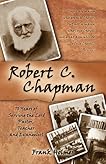 Robert C. Chapman: 70 Years of Serving the Lord by Frank Holmes
My rating: 3 of 5 stars
I would be willing to read pretty much any book about R. C. Chapman. Holmes is a devoted biographer of Chapman, and his admiration of this great man is not lost on the reader. One can tell that the author is not interested merely in preserving historical knowledge about some man of God; he wants his readers to live like him.
Note: I do prefer Peterson's biography.
View all my reviews >>
Wednesday, December 16, 2009
Sultana
 Sultana: Surviving the Civil War, Prison, and the Worst Maritime Disaster in American History by Alan Huffman
My rating: 4 of 5 stars
A remarkable mesh of stories of survival. Traces the hardships of several men through the Civil War, culminating in the disastrous sinking of the Sultana steam boat. Huffman introduced me to the horror of 19th century war, prison camps, and post-war life, including the trip home…
View all my reviews >>
Saturday, December 5, 2009
The Prodigal God
 The Prodigal God: Christianity Redefined Through the Parable of the Prodigal Sons by Timothy Keller
My rating: 4 of 5 stars
A great introduction to Jesus and Christianity for moderns and postmoderns. Keller takes us deep into the heart of one of finest stories ever told by Jesus. The self-righteous will squirm as Keller points out that there are two prodigals, not one, in the story. But both kinds of people—religious and rebels—will feel the attractive pull of Christ when they discover what kind of elder brother He is.
Following Clowney, Keller has seen deeply into this parable. His skill and scope in applying its truth to modern people is breathtaking. His ability to relate Christ to so many things people today care about makes this book the best candidate to give to searching friends.
View all my reviews >>
Saturday, October 24, 2009
Breaking Pornography Addiction
David Powlison is always helpful, even when he writes on pornography. Here's his article in two
parts.
Note: He also has a booklet for those who have suffered from child abuse.
HT: Justin Taylor
Sunday, July 12, 2009
How to read a book
 How to Read a Book by Mortimer J. Adler
My review
rating: 4 of 5 stars
This book promotes reading as an active art. Its goal ought to be more than increased knowledge; rather, it strives for increased understanding. Thus the authors can talk about reading as a form of research, elevating the task of reading far above its stereotype of passivity.
The authors describe four ascending levels of reading: (1) Elementary; (2) Inspectional; (3) Analytical; and (4) Syntopical. The levels are cumulative in the sense that, if you are to read at say level 3, you will have to be simultaneously engaged at levels 1 and 2. The analytical level receives the most attention by far, elementary the least (for those wanting help increasing reading speeds, look elsewhere).
One of the signs of good thinking is careful distinctions. This book introduced me to helpful distinctions between knowledge and understanding, aided and un-aided research, terms and words, practical and theoretical books, good and great books, and many more.
For years I have attempted to read book somewhat “analytically”, but often grew frustrated at the difficulty in outlining certain books. So I cheered when the authors suggested that sometimes that’s because the book isn’t worth reading at any level, never mind analytically.
This quote from p.166 gives the flavor of the book well: “A person who has read widely but not well deserves to be pitied rather than praised. As Thomas Hobbes said, ‘If I read as many books as most men do, I would be as dull-witted as they are.’”
View all my reviews.
Hunting Eichmann
 Hunting Eichmann: How a Band of Survivors and a Young Spy Agency Chased Down the World'sMost Notorious Nazi by Neal Bascomb
My review
rating: 4 of 5 stars
An intense tale of the quest to bring Adolf Eichmann, the operational manager of the Final Solution, to justice.
Made me think of what a great thing it is that Christ will bring the world to justice. All oppressors will be justly dealt with; all innocent suffers will be vindicated.
Contains a powerful quote from Robert Jackson, the lead American prosecutor at the Nuremberg trial. In his opening statement he said:
The privilege of opening the first trial in history for crimes against the peace of the world imposes a grave responsibility. The wrongs, which we seek to condemn and punish, have been so calculated, so malignant, and so devastating, that civilization cannot tolerate their being ignored, because it cannot survive their being repeated. That four great nations, flushed with victory and stung with injury, stay the hand of vengeance and voluntarily submit their captive enemies to the judgment of the law is one of the most significant tributes that power has ever paid to reason.
View all my reviews.
Subscribe to:
Posts (Atom)


